
Understanding Positive Pregnancy Test Lab Results (PDF Focus)
Decoding clinical lab PDF reports for hCG results requires understanding units like IU/L and mIU/mL, alongside reference ranges,
to accurately interpret pregnancy status.
Human Chorionic Gonadotrophin (hCG) is a hormone produced during pregnancy, serving as the primary indicator detected by pregnancy tests. These tests, available for both home use and clinical settings, function by identifying the presence of hCG in either urine or blood. hCG production begins shortly after implantation of a fertilized egg in the uterus.
Clinical laboratories utilize sophisticated assays, often resulting in a PDF report, to quantitatively measure hCG levels. Understanding these reports is crucial for accurate interpretation. A healthy, non-pregnant individual typically exhibits serum hCG levels below 5 IU/L. The detection of hCG, even at low levels, prompts further investigation to confirm or rule out pregnancy. Both qualitative (positive/negative) and quantitative (numerical level) tests are employed, each providing unique insights into the potential pregnancy.
What is a Beta hCG Test?
The Beta hCG test is a specific type of quantitative blood test used to detect and measure the exact amount of Human Chorionic Gonadotrophin (hCG) present in the blood. Unlike standard home pregnancy tests that provide a qualitative result (positive or negative), the Beta hCG test delivers a numerical value, expressed in either International Units per Liter (IU/L) or milli-International Units per milliliter (mIU/mL).
This quantitative measurement is vital for several reasons, including confirming pregnancy, dating the gestation, and monitoring for potential complications. A positive beta hCG level generally indicates pregnancy, with levels increasing rapidly in early stages. The test’s sensitivity allows for early detection, often before a missed period. PDF reports from clinical labs will detail these precise levels, crucial for healthcare providers to assess the pregnancy’s viability and progression.
How to Read a Positive Pregnancy Test
Reading a positive pregnancy test, particularly when reviewing a clinical lab’s PDF report, involves understanding the reported hCG levels and their corresponding significance. A positive result is generally indicated by a value greater than 25 IU/L, firmly suggesting pregnancy. However, levels between 5-25 IU/L require cautious interpretation, as they can represent very early pregnancy or, less commonly, a false positive.
The PDF will display the numerical hCG value alongside a reference range. Any value exceeding the upper limit of the non-pregnant range confirms a positive result. Home pregnancy tests rely on detecting the presence of hCG, showing lines to indicate results. However, the quantitative data from a lab report provides a more precise assessment, aiding healthcare professionals in monitoring the pregnancy’s development and ruling out potential issues.

Interpreting hCG Levels: Quantitative Analysis
Quantitative hCG testing provides precise measurements, crucial for interpreting pregnancy status from PDF reports, establishing baselines, and monitoring progression accurately;
Normal hCG Levels in Non-Pregnant Individuals
Understanding baseline hCG levels is fundamental when interpreting PDF lab reports. For healthy, non-pregnant women, serum hCG levels are typically less than 5 IU/L, as indicated by Exeter Clinical Laboratory International standards. This low level is crucial for differentiating between a negative pregnancy result and potential elevations due to other factors.
It’s important to note that slight variations can occur depending on the laboratory and the specific assay used. However, consistently, values near or below 5 IU/L are considered within the normal range for individuals who are not pregnant. When reviewing a PDF report, this baseline is the key reference point for determining if an elevated hCG level signifies a potential pregnancy or warrants further investigation. Any value exceeding this threshold should prompt careful consideration and potentially, repeat testing.
hCG Levels Indicating Pregnancy: Thresholds
Determining pregnancy from hCG levels involves understanding key thresholds detailed in clinical lab PDF reports. Generally, serum hCG values greater than 25 IU/L strongly indicate pregnancy, according to Exeter Clinical Laboratory International. This level is a significant marker, suggesting the presence of human chorionic gonadotropin, a hormone produced during pregnancy.
However, interpreting levels between 5 and 25 IU/L requires caution, as these can represent very early pregnancy or potentially, false positives. A baseline hCG level of 100 mIU/mL is often considered a robust, positive indicator, suggesting a well-established pregnancy. PDF reports will typically provide specific reference ranges, allowing for accurate comparison and interpretation of individual results. Recognizing these thresholds is vital for healthcare providers and individuals reviewing their lab data.
The 5-25 IU/L Range: Early Pregnancy or False Positive?
Navigating the 5-25 IU/L range on a PDF lab report requires careful consideration, as it represents a grey area between a negative and definitively positive pregnancy result. Exeter Clinical Laboratory International highlights that values within this range often indicate very early pregnancy, potentially just after implantation. However, it’s crucial to acknowledge the possibility of false positive results.
Several factors can contribute to this ambiguity, necessitating repeat testing and clinical evaluation. The PDF report itself may offer cautionary notes regarding this range. It’s essential to avoid jumping to conclusions and to discuss these results with a healthcare provider. Further investigation, including a repeat hCG test within 48-72 hours, can help clarify whether the level is rising, confirming pregnancy, or remains stable, suggesting a potential false positive or non-viable pregnancy.
hCG Levels Above 25 IU/L: Confirmation of Pregnancy
Generally, an hCG level exceeding 25 IU/L, as detailed in your clinical lab PDF report, strongly indicates pregnancy. According to Exeter Clinical Laboratory International, this threshold is widely accepted as confirmation. However, the absolute value provides limited information about the gestational age or the health of the pregnancy. The PDF report will likely include a reference range, allowing comparison to established norms.
While reassuring, it’s vital to remember that higher levels don’t automatically guarantee a healthy pregnancy. Factors like multiple gestations (twins or triplets) can significantly elevate hCG. A baseline level of 100 mIU/mL is considered a particularly positive indicator, but further monitoring with serial hCG measurements and an ultrasound is crucial to assess viability and rule out potential complications like ectopic pregnancy.
Baseline hCG Level of 100 mIU/mL: A Positive Indicator
A baseline hCG level reaching 100 mIU/mL, as documented in your clinical lab’s PDF report, is generally considered a robust positive indicator of pregnancy. Fertility Answers highlights this level as particularly reassuring, suggesting a well-established pregnancy. This value often appears in the quantitative hCG testing section of the PDF, providing a precise measurement of the hormone.
However, it’s crucial to interpret this result within the context of your individual circumstances. While a high baseline is encouraging, it doesn’t preclude the need for further investigation. A significantly elevated level might suggest multiples (twins or triplets), which would be confirmed via ultrasound. Your healthcare provider will analyze this result alongside your medical history and potentially order follow-up tests to ensure a healthy pregnancy progression.

Factors Influencing hCG Levels
Gestational age, multiple pregnancies, and ectopic pregnancies significantly impact hCG levels, as detailed in lab PDFs; miscarriage also causes declining levels.
Gestational Age and hCG Progression

Understanding how hCG levels change with gestational age is crucial when reviewing PDF lab reports. Typically, hCG roughly doubles every 48-72 hours in early pregnancy, a pattern often monitored during the first trimester. However, this doubling time isn’t absolute and can vary significantly between individuals.
PDF reports will display the hCG level alongside the date the sample was taken. Early in pregnancy, levels are lower, but a consistent upward trend is expected. For example, a level of 100 mIU/mL might be seen around 5-6 weeks gestation, increasing to several thousand mIU/mL by 8-11 weeks.
It’s important to note that hCG progression slows down after around 8-10 weeks, and the doubling time becomes less reliable. Variations in hCG progression, as documented in the PDF, should be discussed with a healthcare provider to ensure a healthy pregnancy.
Multiple Pregnancies (Twins, Triplets) and hCG
PDF lab reports revealing significantly higher than expected hCG levels can indicate a multiple pregnancy – twins, triplets, or more. When multiple embryos implant, the placenta produces a greater amount of hCG, leading to elevated readings compared to singleton pregnancies.
A “really high beta hCG” level, as noted in resources, often prompts consideration of multiples, though confirmation requires an ultrasound. While a specific hCG threshold doesn’t definitively diagnose twins or triplets, levels substantially above the typical range for gestational age raise suspicion.
Reviewing the quantitative hCG results within the PDF, alongside the gestational age, provides initial clues. However, it’s vital to remember that hCG levels vary, and an ultrasound is essential for accurate determination of the number of fetuses present. Discuss any unusually high readings with your healthcare provider.
Ectopic Pregnancy and hCG Levels
PDF lab reports showing positive hCG results, coupled with symptoms like abdominal pain or bleeding, necessitate investigation for ectopic pregnancy. This occurs when a fertilized egg implants outside the uterus, most commonly in the fallopian tube.
While an ectopic pregnancy will produce hCG, the levels often rise more slowly than in a typical intrauterine pregnancy. Analyzing the rate of hCG increase, as documented in serial PDF reports, is crucial. A slower rise, or even a plateau, can be a red flag.
It’s important to note that hCG levels in ectopic pregnancies may still be detectable, leading to a positive test, even without a visible pregnancy on ultrasound. Prompt medical evaluation is critical, as ectopic pregnancies are life-threatening if left untreated. Discuss any concerns with your healthcare provider immediately.
Miscarriage and Declining hCG Levels
PDF reports tracking hCG levels are vital when a potential miscarriage is suspected. Following a positive pregnancy test, a noticeable decline in hCG levels, documented across serial lab reports, often indicates a pregnancy loss.
Initially, levels typically double every 48-72 hours in a healthy pregnancy. A slowing rate of increase, followed by a decrease, is a concerning sign. The PDF will show this trend graphically or numerically, allowing healthcare providers to assess the situation.
It’s crucial to understand that hCG doesn’t drop to zero immediately after a miscarriage. It takes time for levels to return to pre-pregnancy values. Continued monitoring via PDF reports is essential to confirm complete resolution and guide further care.

Positive Pregnancy Test Results in Men
Although rare, a positive result in males, detailed in PDF reports, necessitates immediate medical evaluation to identify underlying health concerns and potential causes.
Rare Occurrence of hCG Elevation in Males
Detecting elevated human chorionic gonadotropin (hCG) levels in men via pregnancy tests, as documented in clinical lab PDF reports, is an exceedingly uncommon phenomenon. While often perceived with disbelief, it’s a medical reality demanding prompt investigation. These reports, detailing quantitative hCG measurements, highlight that such occurrences are rarely indicative of paternity. Instead, the presence of hCG in males typically signals an underlying medical condition requiring diagnosis and treatment.
The rarity stems from the hormone’s primary association with pregnancy, produced by the placenta. In men, hCG production isn’t a natural physiological process. Therefore, any detectable level warrants a thorough medical workup to pinpoint the source of this atypical hormone elevation, as outlined in comprehensive lab result analyses.
Potential Medical Reasons for Elevated hCG in Men
Analyzing clinical lab PDF reports revealing elevated hCG in men necessitates exploring several potential medical causes. Germ cell tumors, specifically testicular cancer, are a primary concern, as these tumors can produce hCG. Other possible culprits include non-cancerous conditions like pituitary gland tumors, which can disrupt hormonal balance. Furthermore, certain rare genetic conditions or even liver disease can contribute to increased hCG levels.
It’s crucial to remember that a positive result on a pregnancy test, confirmed by lab data, doesn’t equate to pregnancy in males. Instead, it serves as a red flag, prompting immediate investigation by a healthcare professional to determine the underlying etiology and initiate appropriate treatment. Detailed PDF reports are vital for accurate diagnosis.
Importance of Immediate Medical Attention for Men
Discovering a positive pregnancy test result via a clinical lab PDF report when you are male demands prompt medical evaluation. While seemingly improbable, elevated human chorionic gonadotropin (hCG) levels in men are rarely indicative of pregnancy, but rather signal a potentially serious underlying medical condition. Delaying diagnosis can have significant consequences.
Immediate consultation with a healthcare provider is essential for comprehensive testing, including physical examinations, blood work, and potentially imaging scans like CT scans or ultrasounds. These investigations aim to identify the source of hCG production, which could range from germ cell tumors to other, less common causes. Early detection and intervention are critical for optimal treatment outcomes and overall health management. Ignoring the result is not an option.

Understanding PDF Reports from Clinical Labs
Clinical lab PDF reports detail hCG results, requiring attention to units (IU/L, mIU/mL), reference ranges, and the test date for accurate interpretation.
Locating hCG Results within the PDF
Navigating a clinical laboratory’s PDF report to find your hCG results often involves a systematic approach. Typically, reports are organized by test category, so look for sections labeled “Reproductive,” “Hormone,” or specifically “hCG – Quantitative” or “hCG – Qualitative.” The hCG result itself isn’t always immediately obvious; it might be nested within a larger panel of hormone tests.
Scan for keywords like “Human Chorionic Gonadotropin” or simply “hCG.” The result is usually presented numerically, alongside the units of measurement (IU/L or mIU/mL – more on those later!). Pay attention to any flags or indicators next to the result; these often denote whether the value is within the normal reference range.
PDF search functionality (Ctrl+F or Cmd+F) is your friend! Type “hCG” to quickly jump to relevant sections. Remember that lab report layouts vary, so patience and a careful scan are key to pinpointing your hCG level within the document.
Decoding Units of Measurement (IU/L, mIU/mL)
Understanding the units used to express hCG levels – IU/L and mIU/mL – is crucial for accurate interpretation. IU/L stands for International Units per Liter, representing the concentration of hCG in a liter of blood. mIU/mL signifies milli-International Units per milliliter, a smaller unit of measurement.
Conversion is key: 1 mIU/mL equals 1 IU/L. Therefore, a result of 25 IU/L is the same as 25 mIU/mL. Clinical labs may use either unit, and the PDF report should clearly state which unit is being used.
Generally, levels < 5 IU/L are considered non-pregnant, while > 25 IU/L typically indicate pregnancy. Values between 5-25 IU/L require cautious interpretation. Always compare your result to the reference range provided on your specific lab report, as ranges can vary slightly between laboratories.
Reference Ranges Provided in the PDF Report
Crucially, every clinical lab PDF report includes a “Reference Range” section for hCG results. This range defines the typical values expected in non-pregnant individuals, allowing for comparison with your specific test outcome. Do not rely on generalized reference ranges found online; lab-specific ranges are paramount.
Typically, a non-pregnant female will have hCG levels less than 5 IU/L. However, the report will explicitly state the lab’s defined upper limit of normal. The report may also provide ranges associated with different stages of early pregnancy.
Pay close attention to the units (IU/L or mIU/mL) associated with the reference range. Any result falling outside the stated reference range warrants discussion with your healthcare provider, even if it appears “positive” based on general guidelines. The report is your primary source of accurate interpretation.
Date and Time of the hCG Test in the PDF
Locating the date and time the hCG test was performed within the PDF report is surprisingly vital for accurate interpretation. hCG levels change rapidly in early pregnancy, doubling approximately every 48-72 hours. Knowing the exact test date allows your healthcare provider to assess the rate of hCG increase with subsequent tests.
This information is usually found prominently displayed near the hCG result itself, often in the header or alongside the lab’s identifying information. Confirm the time as well, as timing can be relevant if repeat testing is scheduled closely.
Accurate dating of the test is essential for determining gestational age and monitoring the viability of the pregnancy. Without this crucial detail, interpreting hCG trends and making informed clinical decisions becomes significantly more challenging.

Potential Causes of False Positive Results
Certain medications and underlying medical conditions can sometimes mimic pregnancy, leading to inaccurate positive results on hCG tests, requiring further investigation.
Medications that Can Affect hCG Levels
Several medications are known to potentially interfere with hCG levels, leading to falsely elevated readings on pregnancy tests. These aren’t exhaustive, but include certain fertility drugs containing hCG itself, commonly used in assisted reproductive technologies like IVF. These treatments directly introduce the hormone into the system, causing a positive result even without pregnancy.
Additionally, some medications used in psychiatric treatment, specifically those classified as antipsychotics, have been linked to increased hCG levels in rare cases. Diuretics, often prescribed for managing blood pressure, can also concentrate urine, potentially leading to a higher hCG concentration and a false positive. It’s crucial to inform your healthcare provider about all medications, supplements, and herbal remedies you are taking when interpreting hCG test results.
Understanding these potential interferences is vital for accurate diagnosis and avoiding unnecessary anxiety. Always discuss any medication use with your doctor to properly assess the validity of a positive pregnancy test.
Medical Conditions Mimicking Pregnancy
Certain medical conditions, though uncommon, can cause elevated hCG levels, mimicking the results of a pregnancy test. These conditions necessitate thorough investigation to ensure accurate diagnosis and appropriate treatment. Gestational trophoblastic disease (GTD), a group of rare tumors that develop from pregnancy tissue, is a primary cause of falsely elevated hCG. This includes molar pregnancies and invasive moles.
Furthermore, some non-gestational tumors, such as certain ovarian or testicular cancers, can produce hCG, leading to a positive test result. Kidney disease can also interfere with hCG clearance, causing levels to rise. Rarer conditions like pituitary tumors can also contribute to hCG elevation.
It’s essential to remember that a positive hCG test doesn’t automatically confirm pregnancy; a healthcare professional must consider the patient’s medical history and conduct further testing to rule out these underlying conditions.
Laboratory Errors and False Positives
While modern laboratory testing is highly accurate, the possibility of errors leading to false positive hCG results exists. These errors can occur at various stages of the testing process, from sample collection and handling to analysis and interpretation. Heterophile antibodies, present in some individuals, can interfere with hCG assays, causing falsely elevated readings.
Improper storage or contamination of samples can also compromise test accuracy. Rarely, cross-reactivity with other hormones or substances in the sample can mimic hCG. Furthermore, issues with the test kit itself, such as reagent degradation or manufacturing defects, can contribute to inaccurate results.
Therefore, it’s crucial to confirm positive results with a repeat test, ideally using a different method or at a different laboratory, to minimize the impact of potential laboratory errors and ensure a reliable diagnosis.

Next Steps After a Positive Result
Following a positive hCG result from a PDF report, schedule a confirmation appointment with a healthcare provider to discuss ultrasound options and prenatal care.
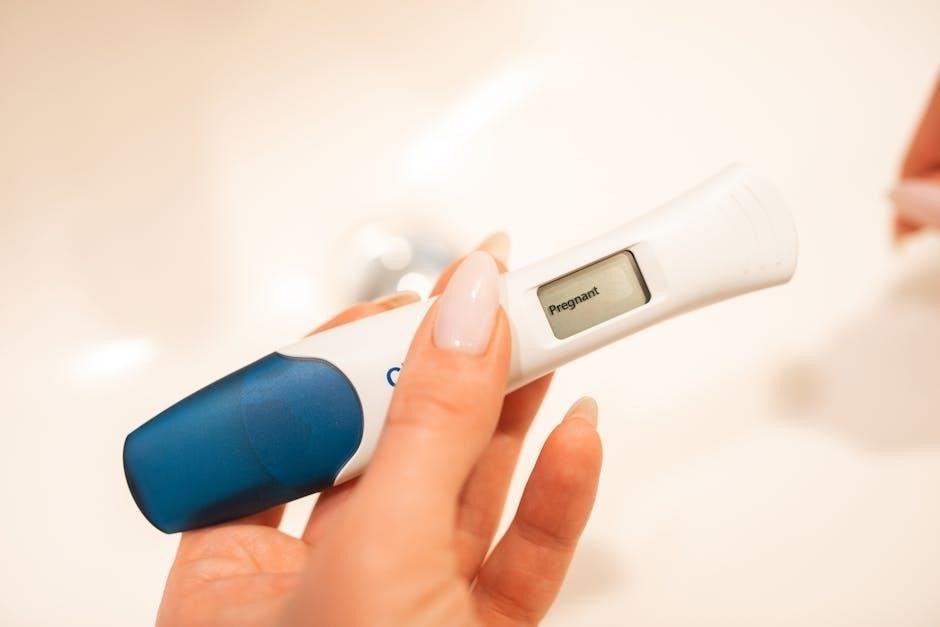
Scheduling a Confirmation Appointment with a Healthcare Provider
After reviewing a positive hCG result within a clinical lab’s PDF report, promptly scheduling a confirmation appointment with your healthcare provider is crucial. This appointment serves several vital purposes beyond simply verifying the pregnancy. Your doctor will likely conduct a physical exam and potentially repeat the hCG blood test to confirm the initial finding and assess the hormone’s progression.
Discussing your medical history, any medications you’re taking, and any existing health conditions is essential during this visit. The provider will explain the next steps, including potential prenatal vitamin recommendations and guidance on lifestyle adjustments. They will also address any concerns or questions you may have regarding the positive result and the implications for your health and well-being. Early prenatal care is paramount for a healthy pregnancy, and this initial appointment sets the foundation for ongoing monitoring and support.
Discussing Ultrasound Options
Following a positive hCG result confirmed by your healthcare provider, discussing ultrasound options is a key step in monitoring the pregnancy’s development. An ultrasound uses sound waves to create images of the uterus and developing embryo or fetus. There are different types of ultrasounds, including transvaginal and abdominal ultrasounds, each offering varying levels of detail depending on gestational age.
Your doctor will explain when an ultrasound is appropriate, typically after hCG levels reach a certain threshold. Early ultrasounds can help confirm the pregnancy’s location, rule out ectopic pregnancies, and estimate gestational age. Later ultrasounds assess fetal growth, anatomy, and overall health. Discuss the benefits and limitations of each ultrasound type with your provider to make an informed decision about the best imaging option for your individual circumstances and medical history.
Understanding Prenatal Care
Following confirmation of pregnancy via positive hCG results and ultrasound, initiating prenatal care is paramount for a healthy pregnancy. Prenatal care encompasses regular check-ups with a healthcare provider, including monitoring your physical health, providing nutritional guidance, and addressing any concerns. These visits involve tracking weight gain, blood pressure, and urine samples, alongside routine screenings for potential complications.

Prenatal care also includes education about fetal development, labor, and delivery. Your provider will discuss essential topics like prenatal vitamins (especially folic acid), safe medications, and lifestyle modifications. Early and consistent prenatal care significantly reduces the risk of pregnancy complications and promotes optimal outcomes for both mother and baby, ensuring a supported and informed journey through pregnancy.